You deep condition religiously. You sleep on satin. You have tried every butter, every oil, every leave-in on the shelf — and your hair is still dry. Not wash-day dry. Not “I skipped my routine this week” dry. Persistently, stubbornly, confusingly dry.
If that sounds familiar, the issue may not be that you need more product. It may be that you have been given hair advice built for a different kind of strand.
Fine afro-textured hair is one of the most underserved categories in beauty. Too often, it gets folded into generic 4C advice that assumes thicker strands, heavier products, and routines that can actually leave fine hair coated, limp, tangled, or still thirsty. The structure of fine afro-textured hair makes it easier to overdry, over-handle, and overload with product — which is why generic natural-hair advice so often misses the mark. There is also real variation across the continent and the diaspora, which is one reason what works for one woman may do very little for another.
What the Cuticle Actually Is
Every hair strand has layers, but the cuticle is the one that matters most in the dryness conversation. It is the outer protective layer of the hair shaft, made up of overlapping cells that sit like shingles on a roof. When that layer is relatively smooth and intact, hair feels softer, has more slip, and does a better job holding onto the moisture you put into it. When it is worn down, chipped, or chronically raised, hair loses softness faster, tangles more easily, and starts to feel rough no matter how much product you apply. Hair-fiber science also points to the importance of the outer lipid barrier in helping reduce friction and preserve the hair’s natural protective surface.
Cuticle condition also strongly influences how quickly hair takes up and loses water, which is why porosity language can be useful. If the cuticle is relatively tight and flat, moisture is harder to get in but tends to stay longer. If it is raised or worn down, moisture enters quickly but leaves just as fast. That is a helpful guide for choosing products and layering techniques — but it is best treated as a guide, not a fixed identity. Hair behaviour shifts over time with how you treat it, and two strands on the same head can behave differently.
Why Fine Afro-Textured Hair Struggles Differently
Afro-textured hair already has a harder time than straight hair when it comes to holding onto softness. The coiled shape creates multiple bends along the strand, which makes the hair more prone to friction, tangling, and knotting. Sebum also has a harder time traveling down a tightly coiled fiber, which helps explain why the scalp can feel fine while the mid-lengths and ends stay dry.
Now add fine strands to that picture.
Fine hair simply has less margin for error. It is easier to rough up, easier to over-handle, easier to overload with product, and easier to snap under tension. A richer routine that works beautifully on coarser, denser 4C hair can leave fine afro-textured hair feeling coated rather than moisturised. Fine hair can feel coated long before it feels nourished — and that difference is at the heart of why so many routines fail on this hair type. The issue is not just curl pattern. It is curl pattern plus strand diameter plus your cuticle condition.
Not All Afro-Textured Hair Behaves the Same
This is where the conversation needs a little more honesty.
Women with afro-textured hair do not all have the same strands, the same density, the same porosity behaviour, or the same response to products. There is broad variation across African populations and the wider diaspora, and recent dermatology literature explicitly warns against treating afro-textured hair as a monolith. That means the routine that gives one woman lush, moisturised twist-outs may leave another woman’s fine strands flat, greasy, or brittle.
That is also why some women need to stop shopping only by identity marketing and start shopping by hair behaviour.
What Keeps Damaging the Cuticle
This is where the dryness cycle usually gets worse.
Chemical processing, repeated heat styling, rough detangling, tight styles, and everyday friction all wear down the cuticle over time. In afro-textured hair, mechanical stress is especially important. The literature repeatedly points to grooming habits — combing, brushing, extensions, tension, and high-manipulation styling — as major contributors to breakage and hair-shaft damage.
And then there is the wetting cycle. Hair swells when wet, and repeated swelling and drying can add stress to the fiber over time, especially when the strand is already delicate. That is one reason some women feel like their hair is “always dry” even though they are constantly wetting it, re-wetting it, and layering more onto it.
What to Do Instead: A Cuticle-First Routine
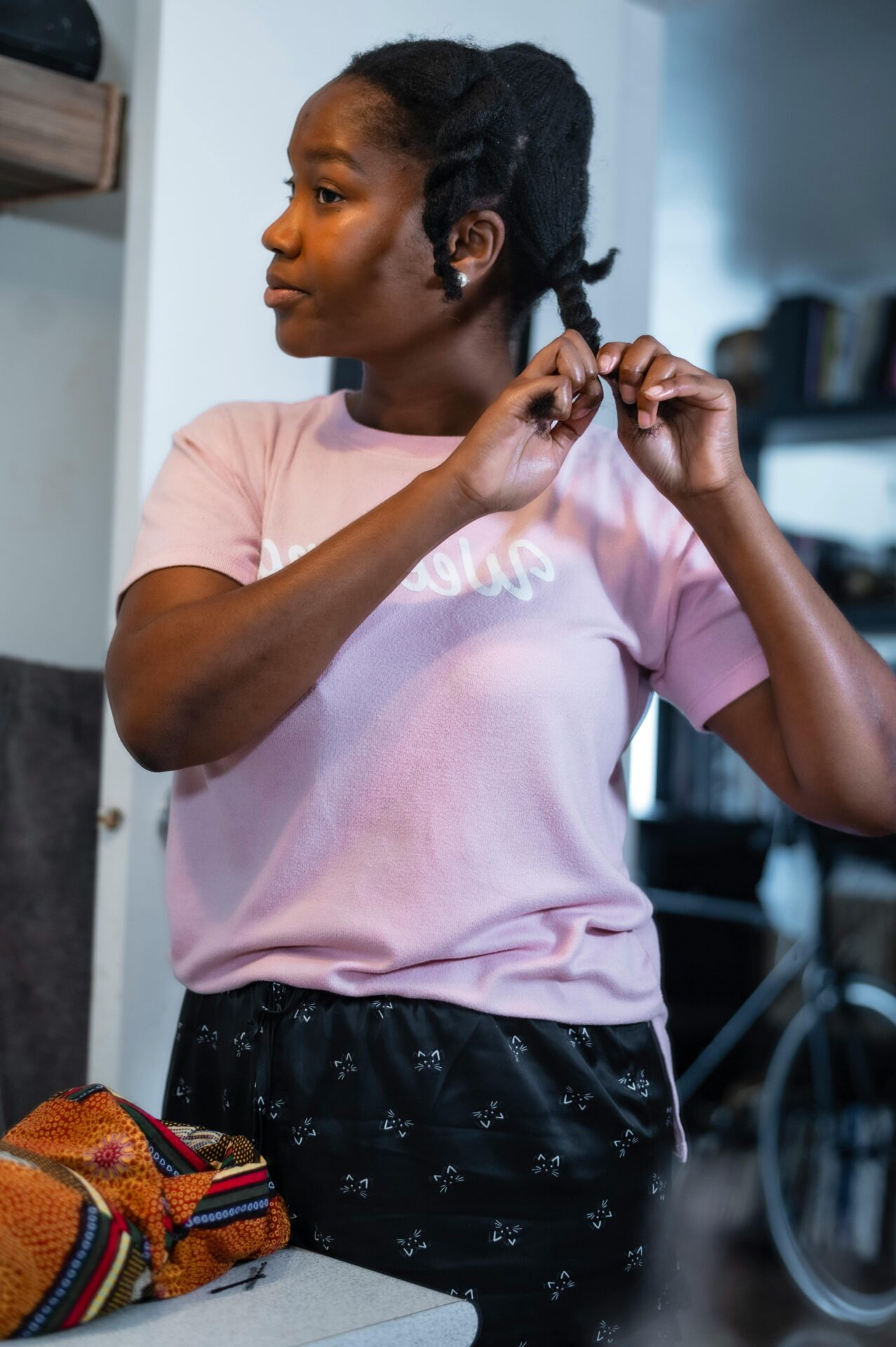
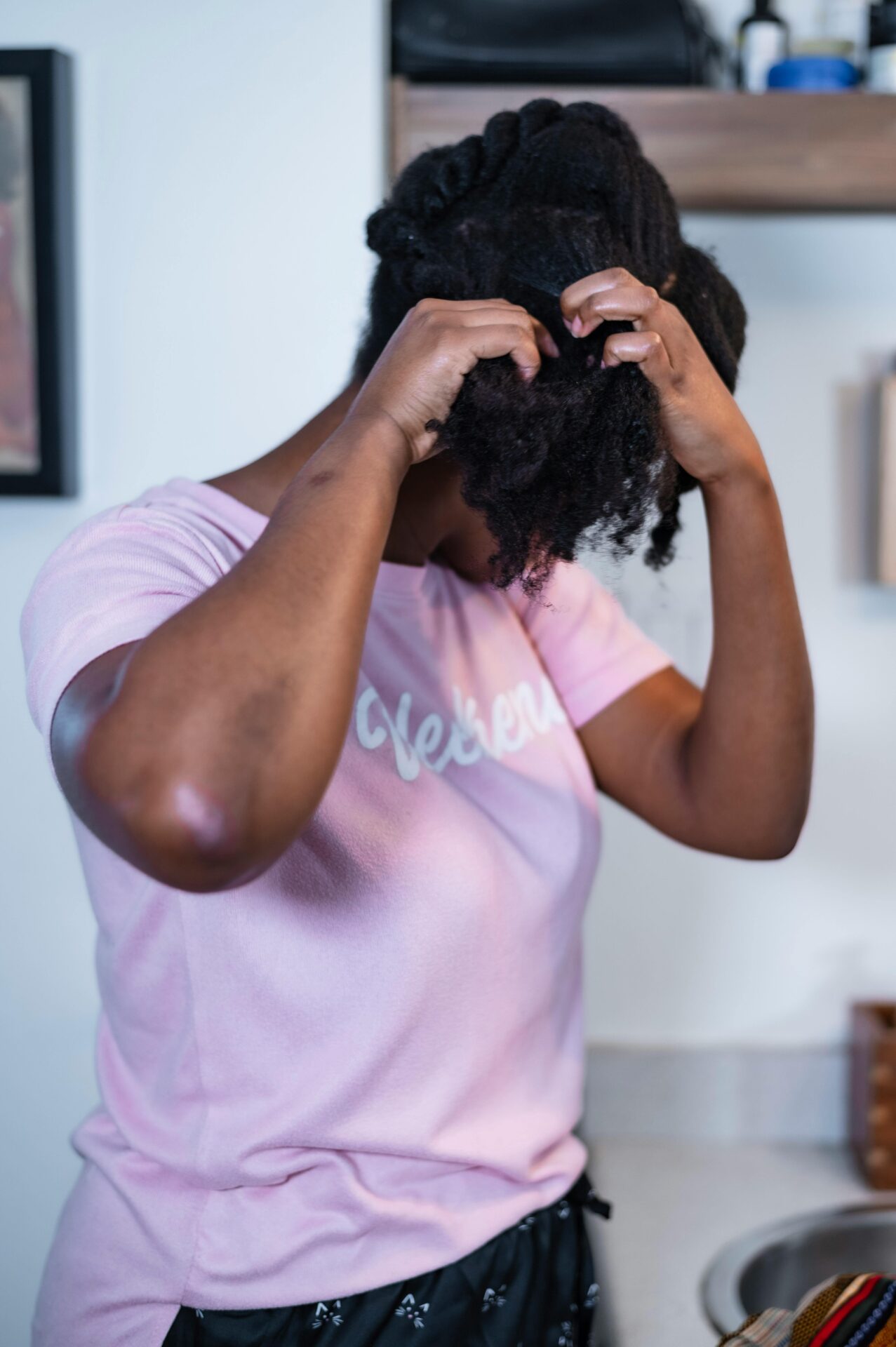
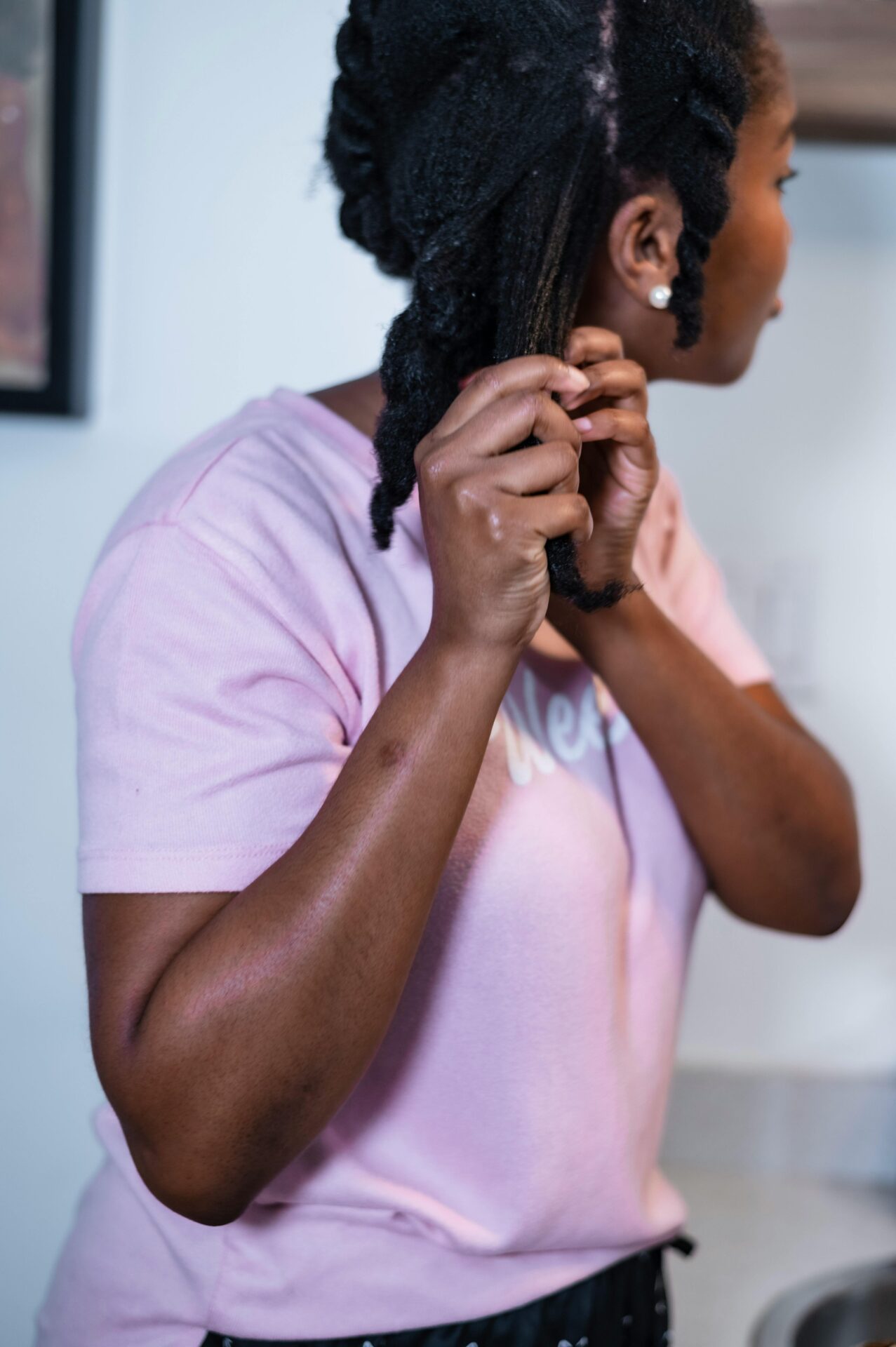
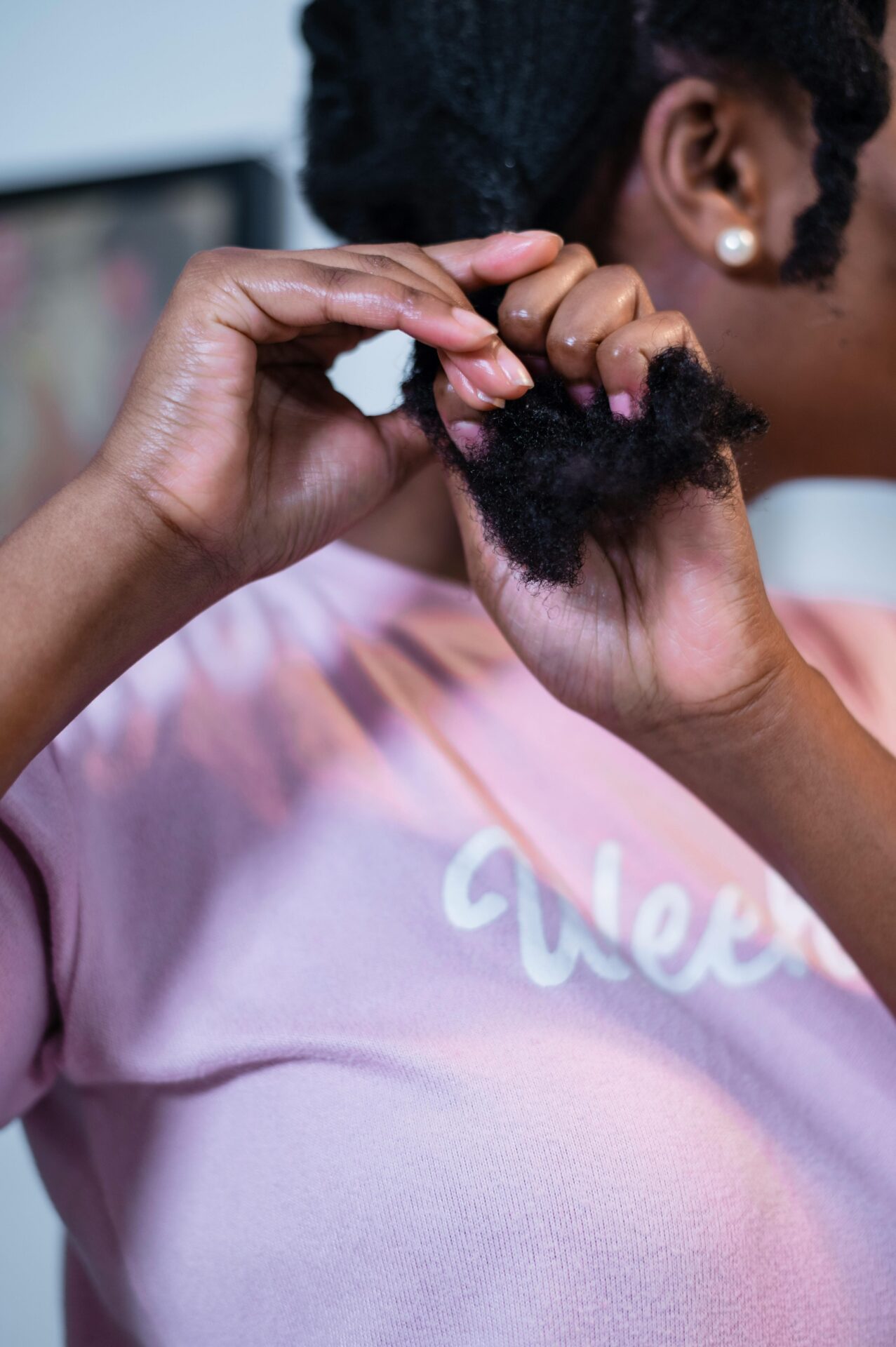
A better routine for fine afro-textured hair starts with a shift in mindset. Stop asking only, “How do I add more moisture?” Start asking, “How do I help my hair hold onto softness without roughing up the cuticle or smothering the strand?”
1. Start with a pre-poo
This is one of the most useful additions for fine afro-textured hair, especially if your strands feel fragile when wet or tangle badly on wash day.
A pre-poo is simply a treatment you apply before shampooing to reduce the stress of washing. It can be as simple as a light layer of coconut oil, a lightweight conditioner, or a slip-focused pre-wash treatment on the lengths of the hair. Coconut oil is especially worth mentioning because one classic study found that, among coconut, mineral, and sunflower oil, coconut oil was the only one shown to reduce protein loss markedly in both damaged and undamaged hair when used as a pre-wash and post-wash grooming product.
For fine hair, the goal is not to drench the strand in oil. It is to create a little protection, reduce friction, and make wash day less punishing. If you would rather not DIY it, Watch & Sea’s “SEA Any Tangles” 3-Way Conditioner was designed to work as a pre-poo, post-shampoo conditioner, or co-wash in one bottle — sulfate-free, seaweed-and-sea-kelp-based, and light enough that it does not leave a film behind. For fine strands, that kind of versatility means fewer products sitting on the hair at once.
2. Deep condition with steam
Warm steam can make a conditioning session feel more effective and may help product spread through the hair, but evidence specific to steam and fine afro-textured strands remains limited. Treat it as an optional technique rather than a requirement, keep the temperature comfortable and avoid prolonged high heat.
3. Cleanse often enough to remove buildup
A lot of women with afro-textured hair were taught that less washing automatically means healthier hair. But buildup can make fine hair feel dull, stiff, and dry in a completely different way. Recent dermatology guidance on afro-textured hair notes that regular cleansing can support scalp health and reduce problems linked to product accumulation and suboptimal grooming habits.
If your hair is fine, you will usually need a cleaner reset more often than someone with denser, coarser strands using the same products.
4. Choose a lightweight conditioner with real slip
Conditioner should make the hair easier to handle, not merely coat it. For fine afro-textured hair, that usually means looking for formulas that soften, detangle, and smooth without leaving a heavy film behind.
And this is where it is worth being honest: the best product for your hair is not always the one with the most familiar marketing language. Sometimes the better question is simpler — is this formula light enough for my strands, does it give real slip, and does it condition without leaving buildup behind?
Products are included as editorial examples. Formulations and availability can change; check current ingredients and choose according to your own hair and scalp needs.
For fine afro-textured hair, it can make perfect sense to explore products formulated for fine hair broadly, including lightweight conditioners and lower-residue leave-ins that were not necessarily designed with Black women on the label. OrganiGrow Hair Co’s The Condish (Protein-Free) is one of the smartest options for fine strands — it skips the protein entirely, conditioning with mango butter, baobab oil, and camellia seed oil for softness without the rigidity that protein-heavy formulas can cause on fine hair. Olaplex N°.5 Bond Maintenance Conditioner markets its formula as ultra-light conditioning for fine hair across all textures. And Kinky Curly Knot Today has been the quiet cult favourite for fine natural hair for years — a lightweight leave-in with real slip that detangles without coating.
That does not mean every woman needs these exact products. It means the logic is sound: shop for function, not just category. You are not betraying your texture. You are responding to your strand size.
5. Be strategic about oils
Oil is not the enemy, but more oil is not always more moisture. For fine strands, a lighter hand usually works better. Coconut oil makes the most sense as a purposeful pre-poo or occasional strengthening support, rather than as a daily answer to every dryness complaint.
6. Pay attention to the protein-moisture balance
This is one of the quieter reasons routines fail. Some fine afro-textured hair benefits from occasional protein-containing treatments, while other strands become stiff or rough with frequent use. If hair feels unusually weak, overly stretchy, or limp, it may benefit from a strengthening treatment. If it feels stiff, dry, and snapping, it may be time to simplify and reintroduce softness. Getting this balance right matters as much as anything else in your routine.
7. Reduce friction everywhere
A satin bonnet or pillowcase still matters. So does gentler detangling, less brushing, less yanking, fewer hard elastics, and more honesty about whether your “protective” style is actually protective. Fine hair does not need drama. It needs less friction.
8. Be thoughtful about how long your hair stays wet
This is one place beauty advice can get overly simplistic. Very high heat can absolutely damage hair, but one study also found that while blow-drying caused more surface damage than natural drying, using a hair dryer at a distance of about 15 cm with continuous motion caused less damage than letting hair dry naturally for a prolonged period. For women whose hair stays wet for hours, that is worth knowing.
That does not mean blasting fine hair with high heat. It means long periods of wetness are not automatically the gentlest option either.
The Real Shift
If your fine afro-textured hair is always dry, the answer may not be that you are lazy, inconsistent, or using the wrong miracle product. It may be that your strands have been asking for something lighter, gentler, and more precise all along.
Your hair may not need more heaviness. It may need less buildup, less friction, a smart pre-poo, a better conditioner, and a routine built around your actual strand size instead of generic natural-hair advice.
Afro-textured hair is not one thing. Fine hair is not one thing. And women living at the intersection of both deserve better than “just add more shea butter.”
Frequently Asked Questions
Why is my fine afro-textured hair always dry even when I moisturise regularly?
One possibility is that the strand has accumulated damage from heat, chemical treatments or repeated handling. Fine strands have less material and can be more vulnerable to mechanical and chemical stress. The answer may be less about adding more product and more about reducing damage and buildup.
How do I know if I have high or low porosity hair?
The simplest indicator is how your hair behaves with water. If water beads up on the surface and takes a long time to absorb, your cuticle is likely relatively tight — what people call low porosity. If your hair wets instantly, absorbs product quickly, and dries feeling rough or straw-like, the cuticle is likely more open — high porosity. That said, porosity is best treated as a useful guide rather than a fixed label. Hair behaviour can shift over time depending on how you treat it, and even different sections of your hair can behave differently.
What is the difference between fine hair and thin hair?
Fine hair refers to the diameter of each individual strand — it is physically narrower than coarse hair, with a thinner cuticle and less protein structure. Thin hair refers to density — how many strands you have per square centimetre on your scalp. You can have fine hair that is dense, or coarse hair that is thin. They are different problems with different solutions. This article focuses on strand fineness, because that is what affects how your cuticle behaves and why moisture does not hold.
Can I use heavy butters and creams on fine afro-textured hair?
You can, but they often cause more problems than they solve on fine strands. Heavy butters like shea and mango can sit on top of fine hair rather than absorbing, which creates buildup that makes the hair feel coated rather than moisturised. Over time, that buildup can also weigh down your curl pattern and make the hair harder to cleanse. Lighter formulas — water-based leave-ins, lightweight conditioners, and creams designed for fine textures — generally work better.
Is it true that washing afro-textured hair less often is always better?
Not necessarily, especially for fine hair. The idea that less washing protects afro-textured hair comes from a real concern about stripping natural oils and causing dryness. But for fine hair, going too long between washes allows product buildup, which can make the hair feel stiff, dull, and dry in its own way. Recent dermatology guidance recommends regular cleansing to support scalp health and reduce problems linked to product accumulation. The right frequency depends on your hair, your products, and your environment — but “never wash” is not the answer for everyone.
Sources and further reading
- Afro-textured hair care: a narrative review and recommendations for dermatologists
- Effect of mineral oil, sunflower oil and coconut oil on prevention of hair damage
- Hair shaft damage from heat and drying time of hair dryer
Persistent breakage, scalp pain, shedding or irritation warrants advice from a dermatologist or qualified hair and scalp professional.