For couples planning an intimate celebration, a restaurant wedding reception can offer something a blank venue cannot: a setting you already love, food you trust and the ease of having much of the reception in one place.
There may already be a restaurant that feels woven into your relationship. You know the table you prefer. You know what you will order before the menu arrives. You have celebrated birthdays there, lingered over long lunches or taken visiting family because you wanted them to experience it too.
For a small wedding reception, that restaurant deserves a place on your venue shortlist.
A wedding meal is not simply a pause between the ceremony and the dancing. It is often the moment when people settle, eat generously, exchange stories and begin to feel that two families have truly come together. Choosing a restaurant you love gives that moment a strong foundation.
The food has already passed your test. The room has a character of its own. The drinks, crockery, cutlery and service team are already in place. With the right booking arrangement, you can host with care without building a reception from a long list of separate suppliers.
It begins with your own taste
A restaurant reception is at its best when it feels personal rather than convenient.
Choose a place because it reflects the way you enjoy being together. It may be a polished dining room with exceptional service, a lush courtyard where lunch runs gently into evening, or a neighbourhood restaurant whose cooking has become part of your life.
This is one of the quiet pleasures of a smaller wedding. You do not have to choose a venue designed to impress hundreds of people. You can choose a room that feels right for the people who matter most.
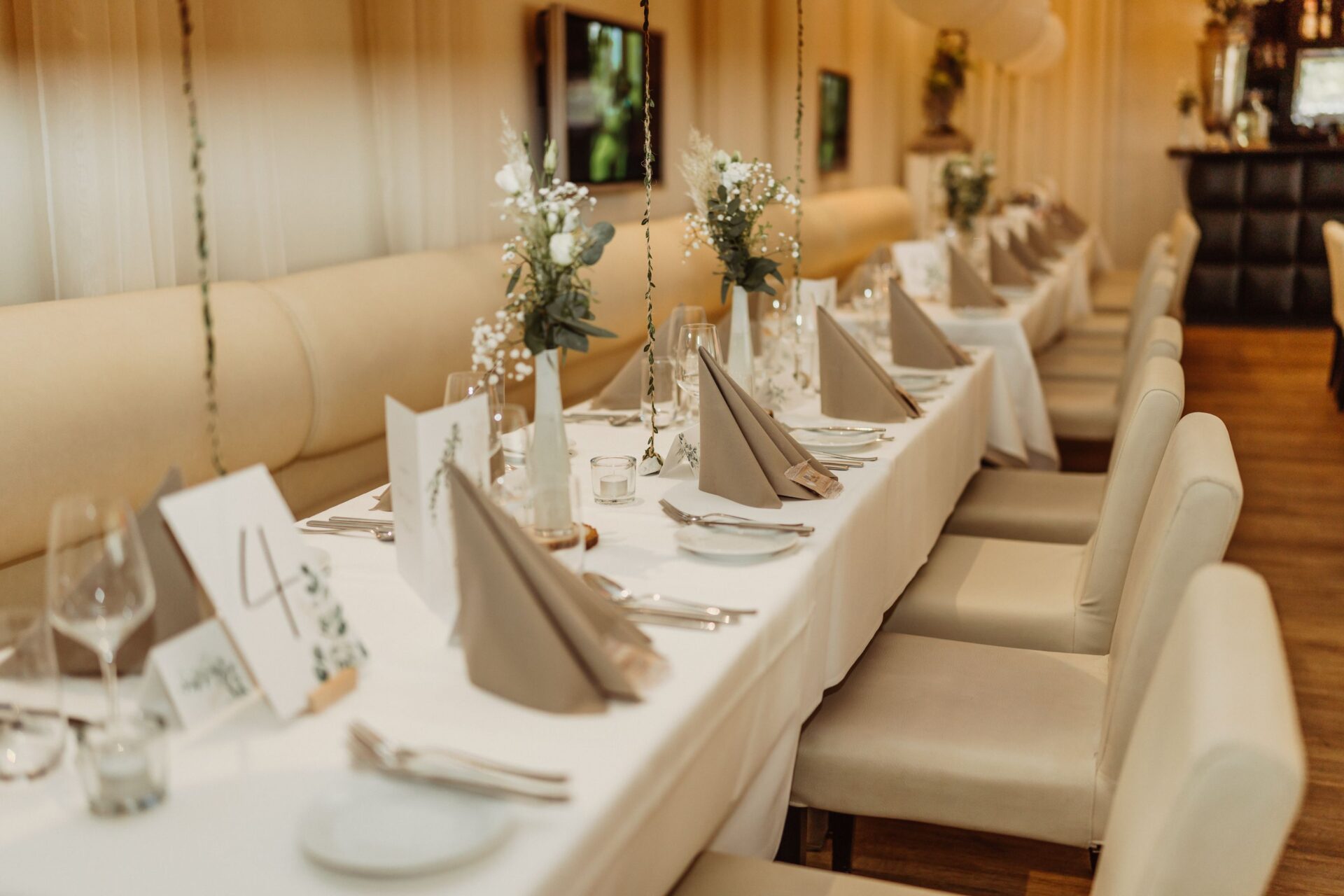
The details already have a point of view: the lighting, the furniture, the flowers at the bar, the bread on the table, the particular way the room sounds when it is full. If you love the setting as it is, you may need only a few thoughtful additions: beautiful menus, flowers with presence and place cards that make guests feel expected.
The food is a reason to choose the venue
Food is among the most discussed parts of any wedding, and for good reason. Guests remember whether they were welcomed warmly, served with ease and fed well.
A restaurant gives you a useful advantage. You are choosing a kitchen because you already believe in its food, rather than hoping a caterer can reproduce a menu from a proposal. The dishes may be contemporary, familiar, rooted in a particular cuisine or simply cooked with great care. What matters is that you would be proud to serve them.
Do not assume that the menu you know will translate exactly to a group reception. Ask which dishes work best for your number of guests and how they will be served. A shared-table lunch can create a warm, generous atmosphere, while a plated dinner may suit a more formal occasion. If your preferred dishes are not part of the group menu, ask whether they can be included.
Give dietary, religious and cultural requirements the same attention you give the main menu. A polished reception makes every guest feel considered, including the person who needs a vegetarian meal, does not drink alcohol or requires food prepared according to a particular standard.
More of the essentials may already be taken care of
A conventional venue may be beautiful, but beauty is only the beginning. Once you add food, drinks, service staff, tables, chairs, linen, glassware, crockery, cutlery, setup and clearing, a simple venue hire can become a much larger undertaking.
A restaurant may bring many of these elements together. Its kitchen is working. Its bar is stocked. Its team knows the room and understands service. The chairs and tableware have been chosen for the space. You may still choose to add flowers, music or a cake, but you are not starting with an empty shell.
That does not make every restaurant package better value. It makes the comparison clearer. You are paying for a meal and a setting at the same time, rather than assembling them separately.
Ask for a detailed proposal before you become attached to the idea. It should specify what is included: the space, furniture, tableware, service staff, food, drinks, setup, clearing and time in the room.
A more intelligent way to spend
There is nothing unsophisticated about wanting a wedding budget to make sense.
A restaurant reception can allow you to spend on the parts of the day guests will actually experience: a memorable meal, good wine or cocktails, attentive service and a room that already has character. It can also reduce the number of suppliers, delivery fees and decisions competing for your attention.
But the total matters more than the headline price.
Many restaurants operate on a minimum spend, particularly for private rooms or exclusive use. This is the amount you agree to spend on the food and drinks specified in the contract. It may be entirely reasonable for a party of 35. For 15 guests, it may mean you are paying well beyond what the group would naturally eat and drink.
Ask whether the minimum includes drinks, tax, service charges and gratuities. Establish whether it applies to food and beverage only, or whether it can be used for flowers, music or additional hours. Confirm the price of exclusive use, cake service, corkage, security, overtime and cancellation.
A restaurant reception is a strong financial choice when the full proposal gives you the celebration you want for less complexity and a sensible total. It should never be chosen simply because the first number looks lower.
Create room for the people and moments that matter
Small does not always mean uncomplicated. Your reception may include prayers, blessings, introductions, speeches, toasts, a first dance or a few cherished family traditions. The restaurant needs to have room for the version of the celebration you want to hold.
Discuss the programme before paying a deposit. A private dining room may be ideal for a long, elegant lunch but unsuitable for a live band. A semi-private area may work beautifully for drinks and dinner but make speeches difficult if other diners are nearby. A full buyout may allow more freedom, but it will usually carry a higher minimum spend.
Think about your guests, too. Is the room comfortable for older relatives? Are the bathrooms and entrance accessible? Is there enough space for children, if they are invited? Will people be able to arrive and leave easily? If you are planning a terrace or courtyard reception, what happens if it rains?
The best restaurant reception feels effortless because these questions were answered well in advance.
Make the celebration feel considered
The aim is not to turn the restaurant into a conventional wedding venue. It is to make the room feel unmistakably yours.
Begin with a welcome. It could be a glass of sparkling wine, a house cocktail named for the couple, chilled hibiscus tea or a favourite non-alcoholic drink. Use a printed menu to tell guests what they are about to share. Choose one beautiful cake. Place flowers where they will have the greatest effect, rather than scattering décor across every surface.
Plan the meal around the rhythm of the evening. Allow time for guests to arrive and greet one another before the first course. Decide when family members will speak. Let the restaurant know when you would like the cake served. If music is permitted, keep it suited to the room and the conversation you want people to have.
One reliable person should hold the plan for the day. A restaurant manager can run excellent service, but they are not automatically responsible for coordinating speeches, photographs, suppliers or family arrivals.
Before you book
- Are you reserving tables, a private room, part of the restaurant or exclusive use?
- What does the quoted price include, and what will be charged separately?
- What is the minimum spend, and what happens if you do not meet it?
- Are taxes, service charges, gratuities, cake fees and overtime included?
- What menu and drinks arrangements work best for your guest count?
- What are the rules for outside cake, flowers, photography, music and décor?
- Can the restaurant accommodate the moments, people and practical needs that matter to you?
A favourite restaurant gives you more than a convenient location. It gives your celebration a sense of continuity. The meal is one you chose with confidence. The room already means something. Your guests are not simply attending an event; they are being welcomed to a table that reflects the life you are building together.
Later, you may return for dinner and find that a familiar place now holds one of your happiest memories.