A note on language
Kwanjula is a Luganda word and the name of the formal introduction ceremony in Kiganda marriage tradition. The term is now also used more broadly in Uganda, while introduction customs in other Ugandan communities carry their own names, protocols and histories.
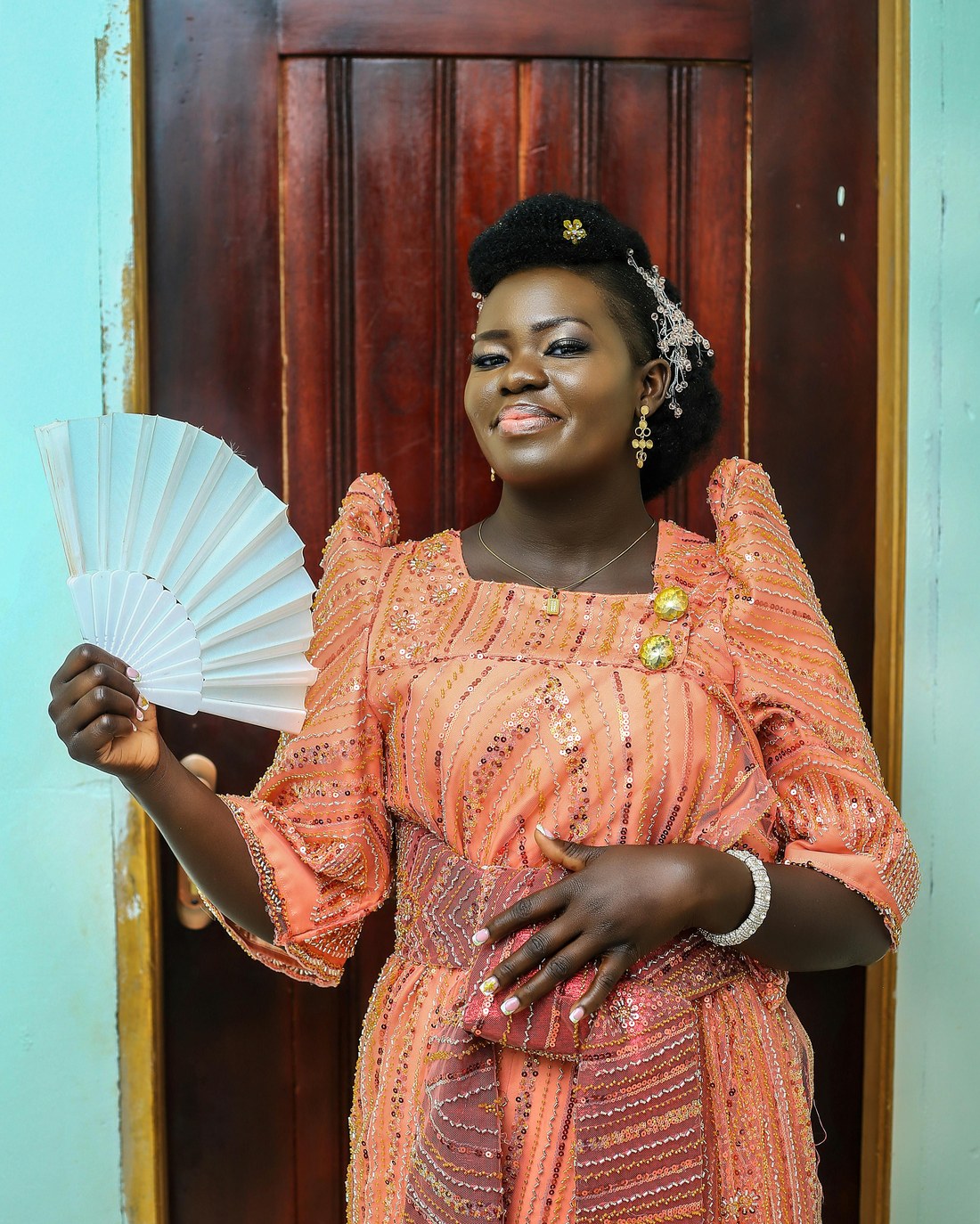
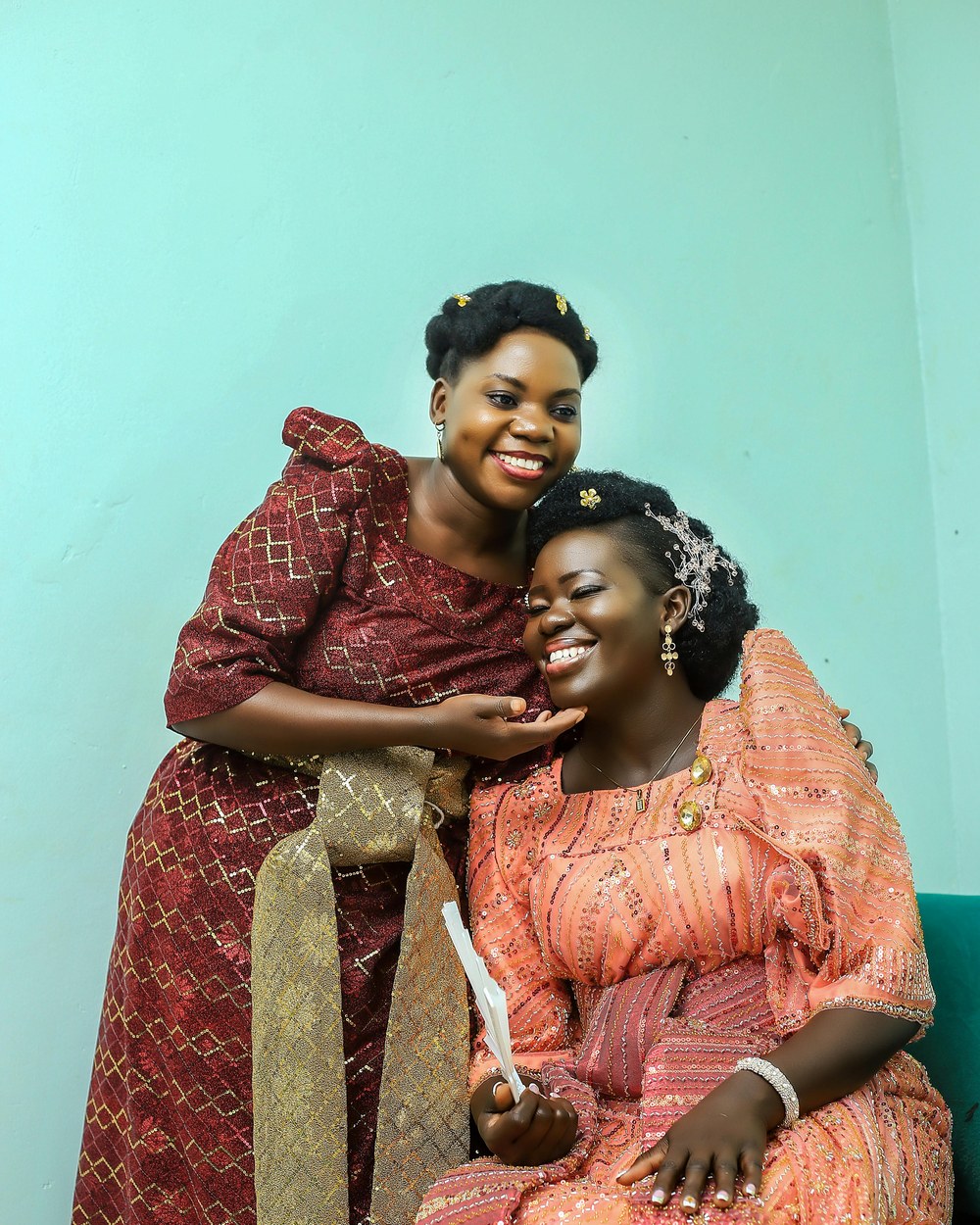
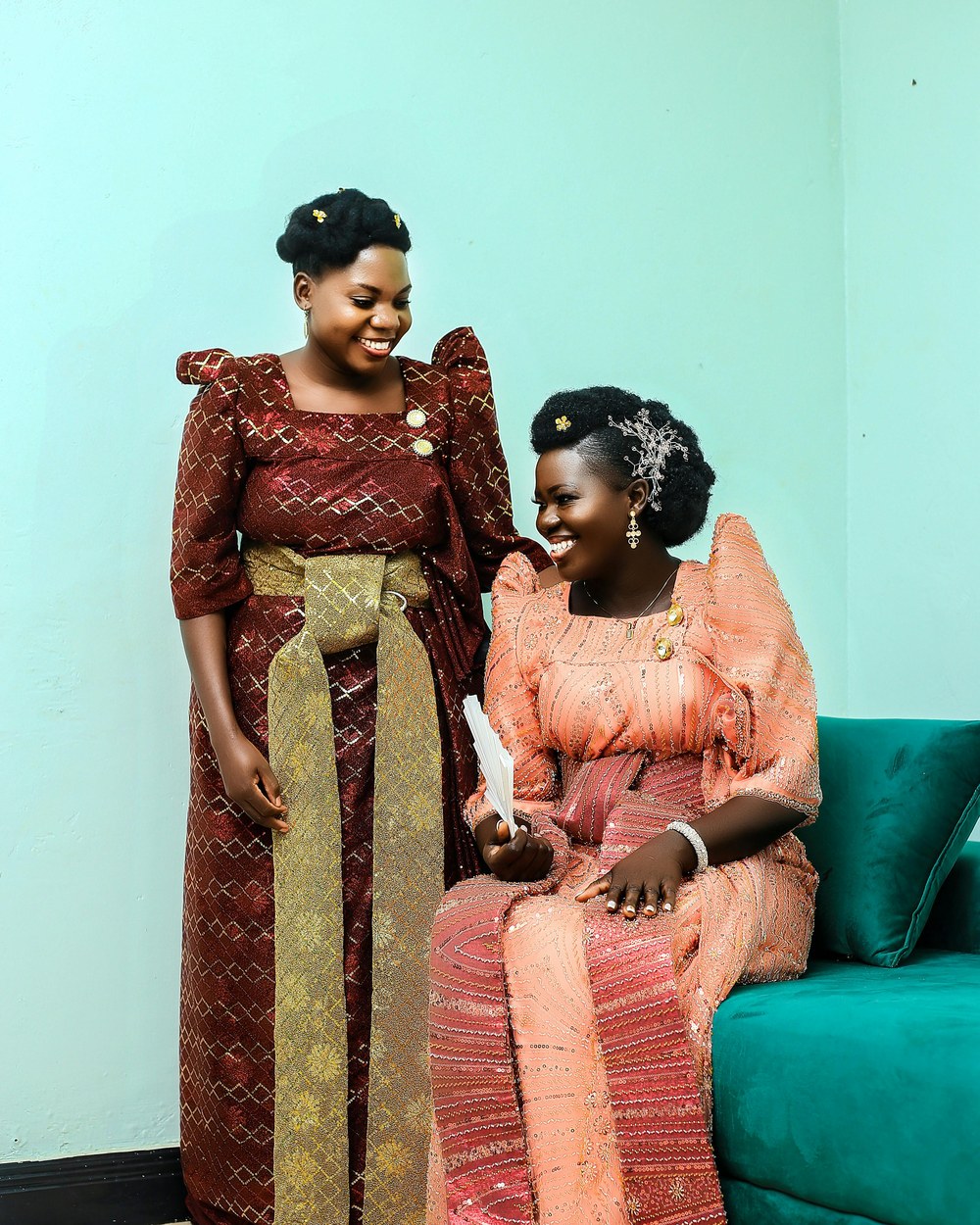
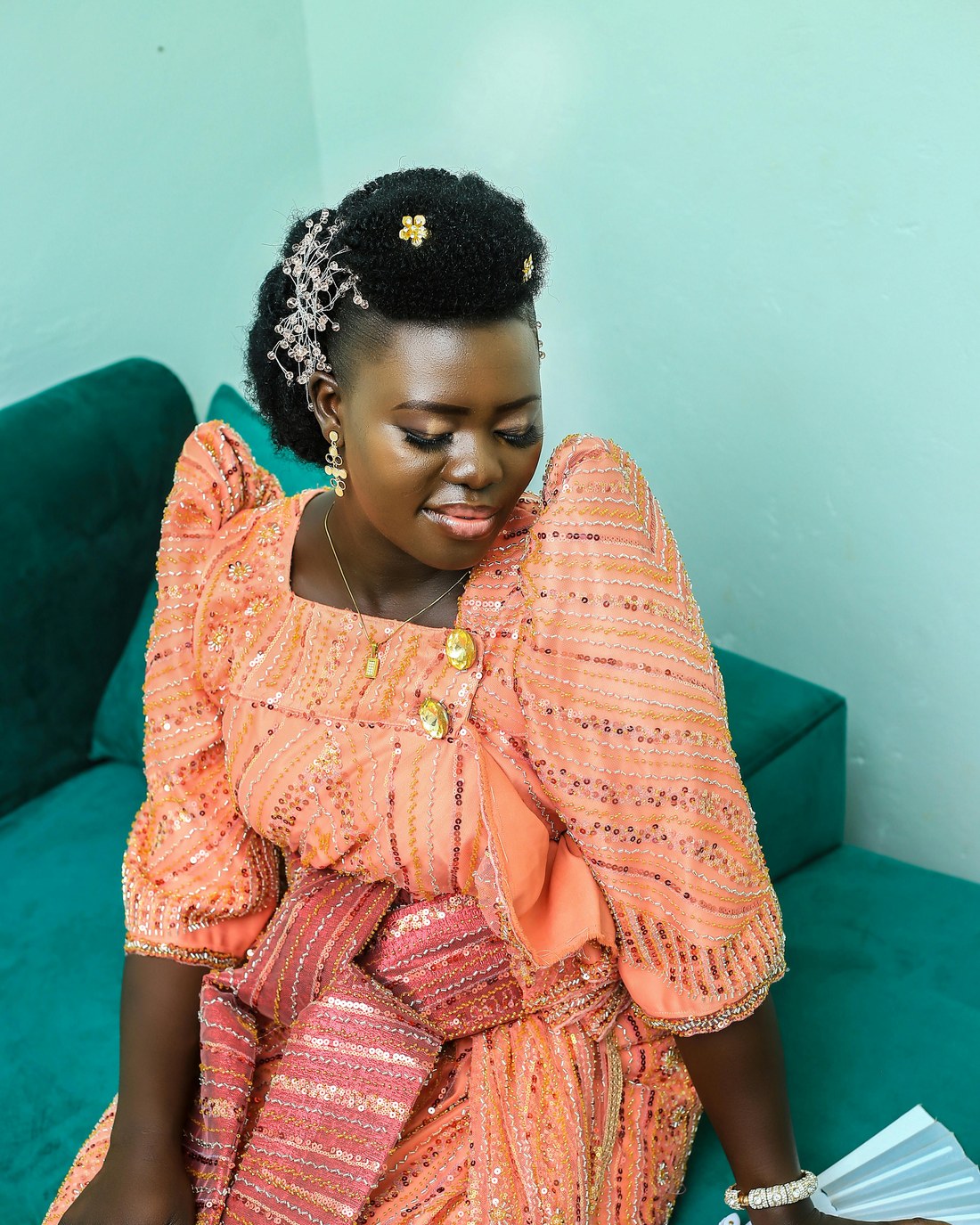
At a Kiganda kwanjula, the gomesi does not read as decoration. Its silhouette immediately places the wearer inside a language of ceremony: the square neckline, the sculpted shoulders, the floor-length fall of cloth and the sash secured around the hips. Colour may make the first impression, but the dress carries something deeper. It joins personal style to family ritual.
That is why a gomesi brief is rarely as simple as choosing a beautiful fabric. The complete look may need to answer several questions at once. What does this family consider correct for the ceremony? Who is wearing a gomesi, and in what role? Is the bride coordinating a small group or several branches of two families? What can each wearer comfortably afford? And who has the technical knowledge to turn a swatch into the right silhouette?
Every family arrives at its gomesi brief differently. The decisions may move through a WhatsApp group, a meeting of relatives, a market visit or a conversation with a trusted tailor. What matters is that the brief honours the garment, the tradition it belongs to and the practical needs of the women who will wear it.
Name the Tradition
In its precise sense, a kwanjula is the formal Kiganda introduction in which the prospective husband and his people are received by the prospective bride’s family. As Ugandan scholar Stephen Kaduuli writes in his study of marriage traditions in Busoga and Buganda, these ceremonies join not only two people but families and clans. The Luganda term has travelled: Ugandan usage now often applies kwanjula more generally to a traditional introduction, including celebrations beyond Buganda.
The word has a wider contemporary life and a specific cultural home. Its Kiganda roots remain essential to understanding the ceremony, even as kwanjula has become familiar shorthand for traditional introductions in other parts of Uganda.
For intercultural couples, that distinction has practical value. Before the attire is briefed, both families need to agree whose ceremony is being followed, whether traditions are being blended and which elders or cultural guides will settle questions of protocol. A beautiful look cannot repair a cultural misunderstanding that should have been resolved first.
Read the Dress
The gomesi, also called a busuuti, is the formal dress most closely associated with women in Buganda and is now one of Uganda’s most recognisable ceremonial garments. Its defining features are structural: a long skirt, square neckline, prominent shoulders, short sleeves and a broad sash tied around the waist or hips. A kikooyi is traditionally worn beneath it, although the exact underlayer and method of dressing should be discussed with the tailor making the garment.
Its history is more layered than the familiar one-line origin story. Published accounts connect the modern tailored form to Goan or Indian tailors working in early twentieth-century Buganda and to uniforms developed for girls at Gayaza. Yet the archival story is contested, and earlier wrapped forms of women’s dress predate those accounts. A Makerere University study traces the garment through changes in material, from barkcloth to cotton, khadi and kikooyi.
The gomesi is best understood through evolution. It carries older Buganda material traditions, later tailoring, imported cloth and generations of local adaptation. Its history lives in the way those influences became a distinctly Kiganda form of dress.
The gomesi carries older Buganda traditions, generations of local adaptation and a silhouette that remains unmistakably its own.
Build the Brief
Colour planning takes different forms from one kwanjula to another. Some families match particular groups in the same cloth; others work within a shared colour family or invite women to choose formal gomesi of their own. The right approach is the one that reflects the family’s customs, relationships and budget.
The ssenga, traditionally the bride’s paternal aunt, often holds an important place in Kiganda marriage preparation. But even here, the useful question is not who wins every disagreement. It is who has been entrusted to guide the attire, who controls the budget and how the bride’s own choices will be heard. Family authority and bridal agency do not need to be written as enemies.
A strong gomesi brief separates cultural requirements from styling preferences. The cultural layer comes from the family and trusted elders. The technical layer comes from the tailor. The visual layer can be led by the bride, designer or planner. Confusion begins when one person is silently expected to carry all three.
The Kwanjula Gomesi Planning Brief
01 · Confirm the cultural frame
Write down whether the ceremony is Kiganda, another Ugandan introduction tradition or a deliberate blend. Agree which family elders or cultural guides will answer protocol questions.
02 · Name the decision-makers
Identify who approves the bride’s gomesi, who coordinates any family groups, who manages the attire budget and who communicates the final decision. Do not leave authority implied.
03 · Define the attire groups
List the bride, women with formal roles, close family, attendants and visiting family separately. Decide which groups need matching cloth, a shared palette or no coordination at all.
04 · Set the budget before the colour
Agree what the family is paying for and what each wearer is expected to cover. If budgets differ, coordinate by colour family instead of forcing one fabric or price point on everyone.
05 · Speak to the tailor before buying cloth
Ask about suitable fabric weight, required quantity, the kikooyi or other underlayer, sash construction, number of fittings, measurement deadlines, pressing, storage and dressing support on the day.
06 · Approve a physical swatch
Phone screens shift colour. Review the actual cloth in daylight, against the décor palette and beside any other coordinated fabrics before ordering in volume.
07 · Record the complete look
Keep one shared brief with swatch photos, fabric codes, purchaser, cost, tailor, fitting dates, accessories, shoes, delivery date and the person responsible for helping each key wearer dress.
08 · Protect the final week
Complete the last fitting early enough to correct the shoulders, hem, sash and underlayer. Confirm how every garment will be transported, pressed and kept ready for the ceremony.
The Work Behind the Look
If a family uses WhatsApp, the group may carry the swatches, measurements, deadlines and revisions. But WhatsApp is a planning tool, not the tradition itself. The deeper work is relational: listening across generations, making the budget visible before it becomes embarrassing and giving the tailor enough time and information to do skilled work.
The gomesi is not made complete by fabric alone. Its line depends on construction. Its ease depends on fit. Its dignity on the day depends on the wearer being able to move, sit and participate without fighting the garment. The best brief protects the ceremony, the wearer and the budget at the same time.
Why It Matters
The gomesi has moved through materials, decades and communities without losing the visual grammar that makes it recognisable. That is not a story of cultural purity. It is a story of continuity through change.
At a kwanjula, the dress can make family belonging visible. It can honour the formality of the introduction while giving a woman room to choose colour, texture and finish for herself. It can also reveal the quiet infrastructure behind a polished ceremony: the elder who knows the protocol, the relative who keeps everyone informed, the tailor who understands the shoulder, and the person who notices that a beautiful plan has become too expensive.
When the brief is good, none of that labour needs to announce itself. The gomesi simply sits as it should. The wearer can move. The family recognises the occasion. And a garment rooted in Buganda enters another photograph, still unmistakably itself.
Sources & further reading
Planning a kwanjula? Find Ugandan traditional-wear designers, planners, photographers and venues in the Mukhaye Wedding Directory.