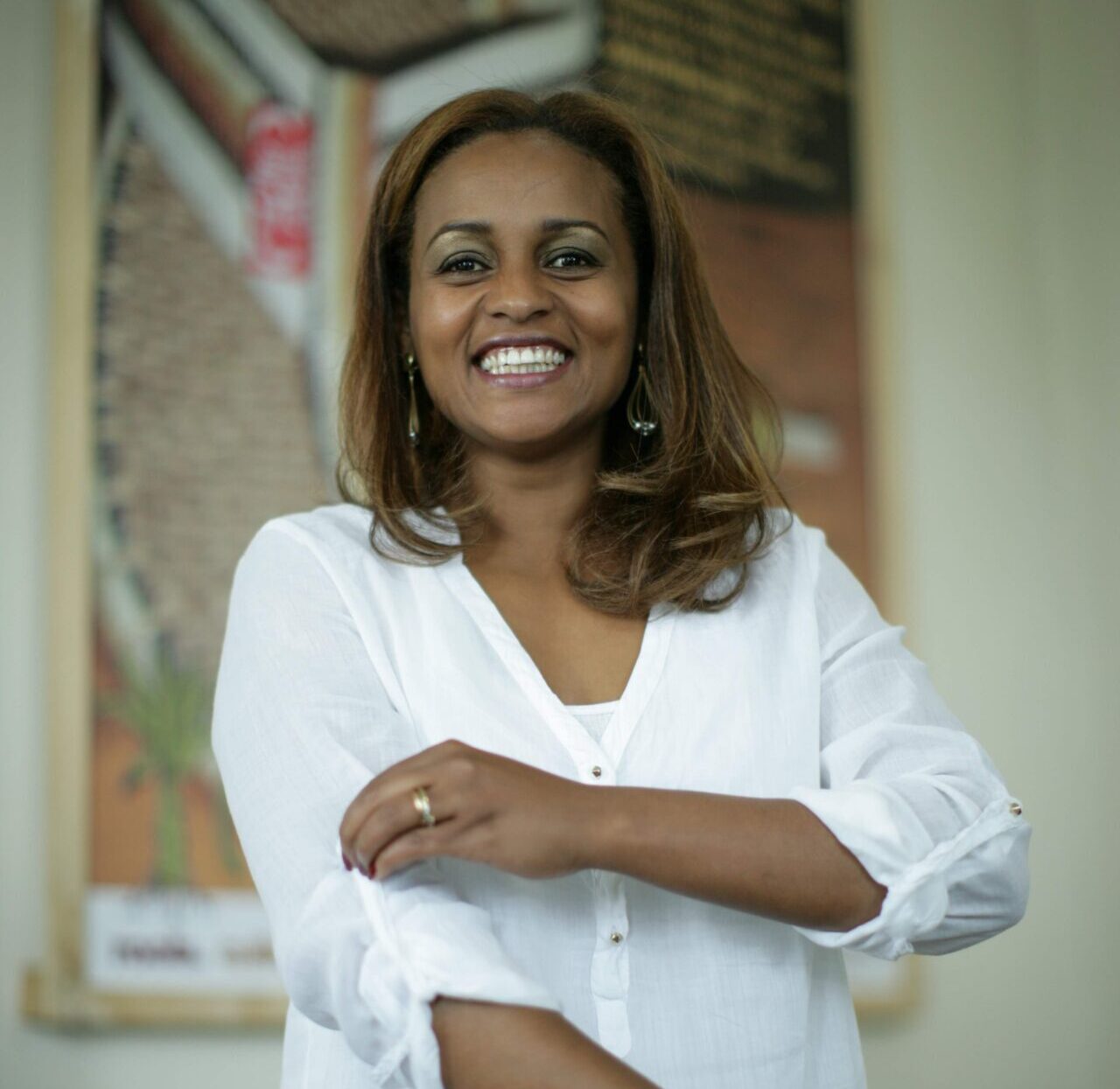
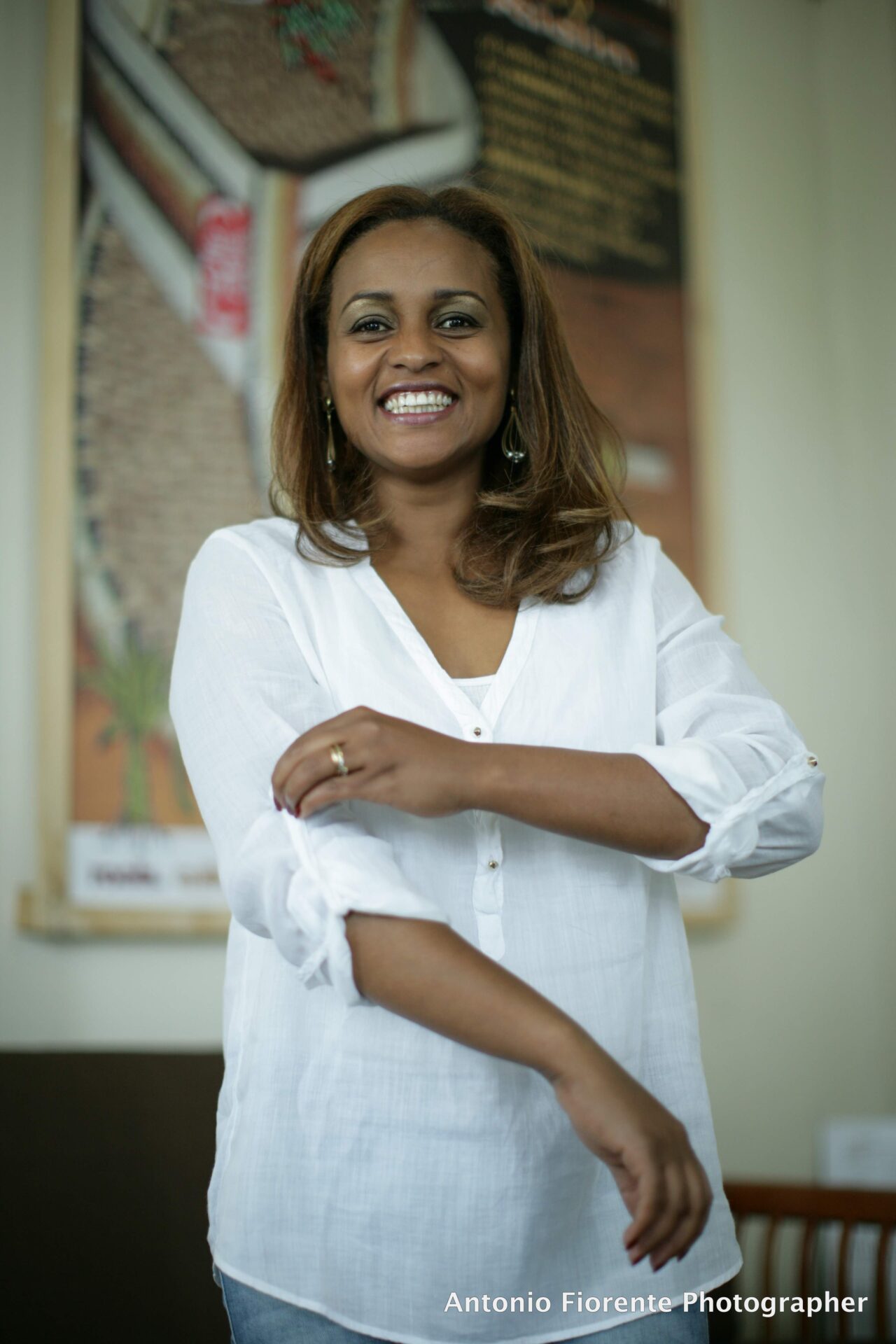
Through Garden of Coffee, Bethlehem Tilahun Alemu is making the case that Ethiopia should capture more of coffee’s roasting, branding, and retail value at origin.
Ethiopia gave the world the Arabica bean—and for most of its modern history, that is where the country’s role in the global coffee industry has ended. Raw green beans shipped out, while the roasting, branding, and premium margins were captured elsewhere. Bethlehem Tilahun Alemu has spent two decades building businesses designed to change that.
The Ceremony
It began in her mother’s house.
Bethlehem was sitting with her family one afternoon in Addis Ababa, watching a ritual she had known since before she could name it. Her mother was hand-washing fine Yirgacheffe beans she had selected herself at the market. Then came the ceramic roaster, hand-crafted and cone-shaped, and the slow, deliberate rotation of each bean over heat, exactly as her grandmother had done it, and her grandmother before that. The aroma filled the room. The coffee, when it came, was something close to sacred.
Bethlehem asked herself a question that afternoon: how could she give coffee lovers everywhere an experience that captured not just the beans but the entire artisan culture that surrounded them: the hands, the heritage, the centuries of knowledge passed from mother to daughter?
The answer would eventually become Garden of Coffee. But this is a story about more than one company. It is a story about what it takes to insist that a country growing some of the world’s finest coffee should also be the one roasting, branding, and exporting it. And about what an entrepreneur from one of the poorest neighbourhoods in Addis Ababa was willing to stake on that conviction.
The Birthplace of Arabica
Coffee is the most traded tropical agricultural commodity on earth, a $250 billion global market, with the specialty segment alone exceeding $100 billion and growing at over ten percent a year.
Ethiopia sits at the centre of all of it. Every Arabica bean on the planet descends from the wild coffee forests of its southwestern highlands. The country is the fifth-largest producer in the world, home to thousands of indigenous varieties that exist nowhere else. Ethiopian coffee exports reached a record $2.65 billion in the 2024–25 fiscal year, accounting for roughly a third of the country’s foreign exchange. Some fifteen million Ethiopians depend on the crop.
More than half of those exports qualify as specialty grade. From coffee shops in Bratislava to pour-over bars in New York City, Ethiopian Yirgacheffe is being served in specialty coffee shops all over the world, consistently among the most sought-after single origins in specialty coffee. And the market is accelerating: global coffee export prices rose 38.8 percent in 2024 alone, according to the FAO, while African coffee exports climbed 15.3 percent in January 2026.
And yet, according to an International Trade Centre export analysis, 98.2 percent of Ethiopia’s coffee exports between 2017 and 2021 were raw green beans. Roasted coffee exports were negligible. In several key markets for finished coffee (Israel, South Korea, China), Ethiopia’s share was near zero, despite significant unrealised potential. The birthplace of Arabica still captures almost none of the finished-product margin.
The Total/Zenabwork Girl
Bethlehem was born in 1980 in Total/Zenabwork, one of the most impoverished neighbourhoods in Addis Ababa. Her mother was a cook. Her father was an electrician. They were, by her telling, loving and thoughtful people who treated everyone with dignity and insisted their daughter pursue education.
She studied accounting at Unity University, working to support herself and her brothers through college. While still a student she took jobs across Ethiopia’s leather and apparel sector, picking up marketing, sales, design, and production roles and absorbing the industry from the inside. The accounting degree gave her a precision about value chains that would later become a signature.
But it was what she saw in her own neighbourhood that gave her a mission. She had watched what aid and charity had done to her community: it bred complacency and fostered dependence. Whatever she built, she decided, had to be genuinely business-oriented. Not a programme. Not a project. A company. And she would build it without leaving.
“I have never lived anywhere else but Ethiopia. There is a distorted but powerful conventional wisdom, here and across Africa, that says if you want to succeed then get out and go, especially west. I wanted to show that it is possible to be a local person, in Ethiopia and in Africa, and also be globally successful.”
Her Mother’s Thread
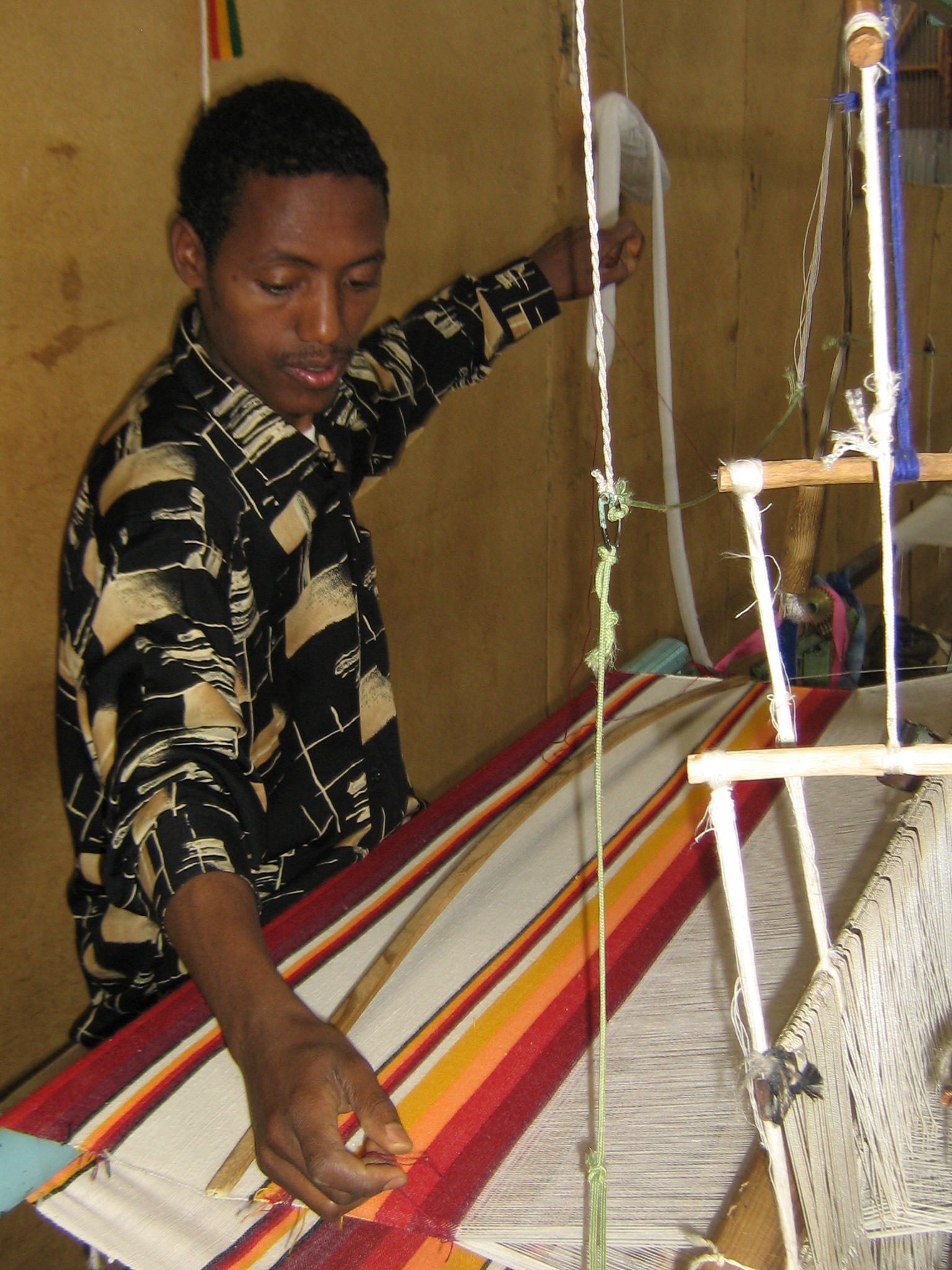
Bethlehem’s first venture drew directly from her mother’s craft. Growing up, she had watched her mother hand-spin cotton with an inzert, the traditional wooden drop spindle used in Ethiopia for centuries. She had watched shemmanies (weavers) loom those hand-spun threads into the fabrics used for netalla and gabbi. All around her were the seleate and barabasso, the traditional shoes with soles cut from recycled car tyres. She saw artisan talent, natural materials, and a heritage that nobody was monetising.
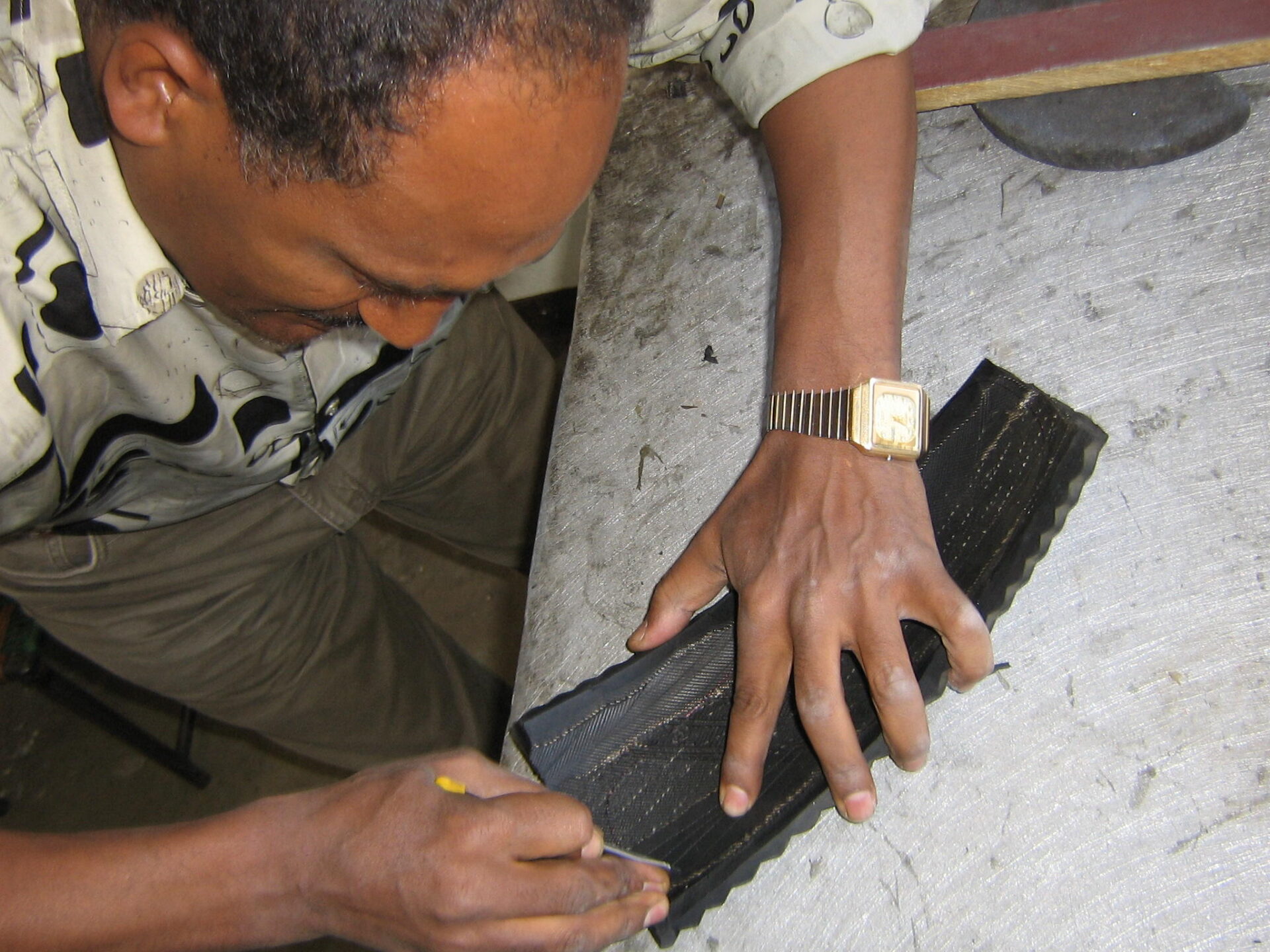
Footwear, she decided, would be the platform. She called the company soleRebels. The name was deliberate: they were rebelling against the status quo, through the sole of a shoe. Every strand of thread is hand-spun. Every metre of fabric is hand-loomed. Soles are hand-cut from recycled tyres. The production process is zero-carbon not because of a sustainability consultant but because these methods have been zero-carbon in Ethiopia for millennia. Bethlehem calls it green by heritage.
The company became the world’s first and only WFTO-certified Fair Trade footwear brand, grew to over 300 employees, and reached distribution in thirty countries, with flagship stores stretching from Silicon Valley to Athens.
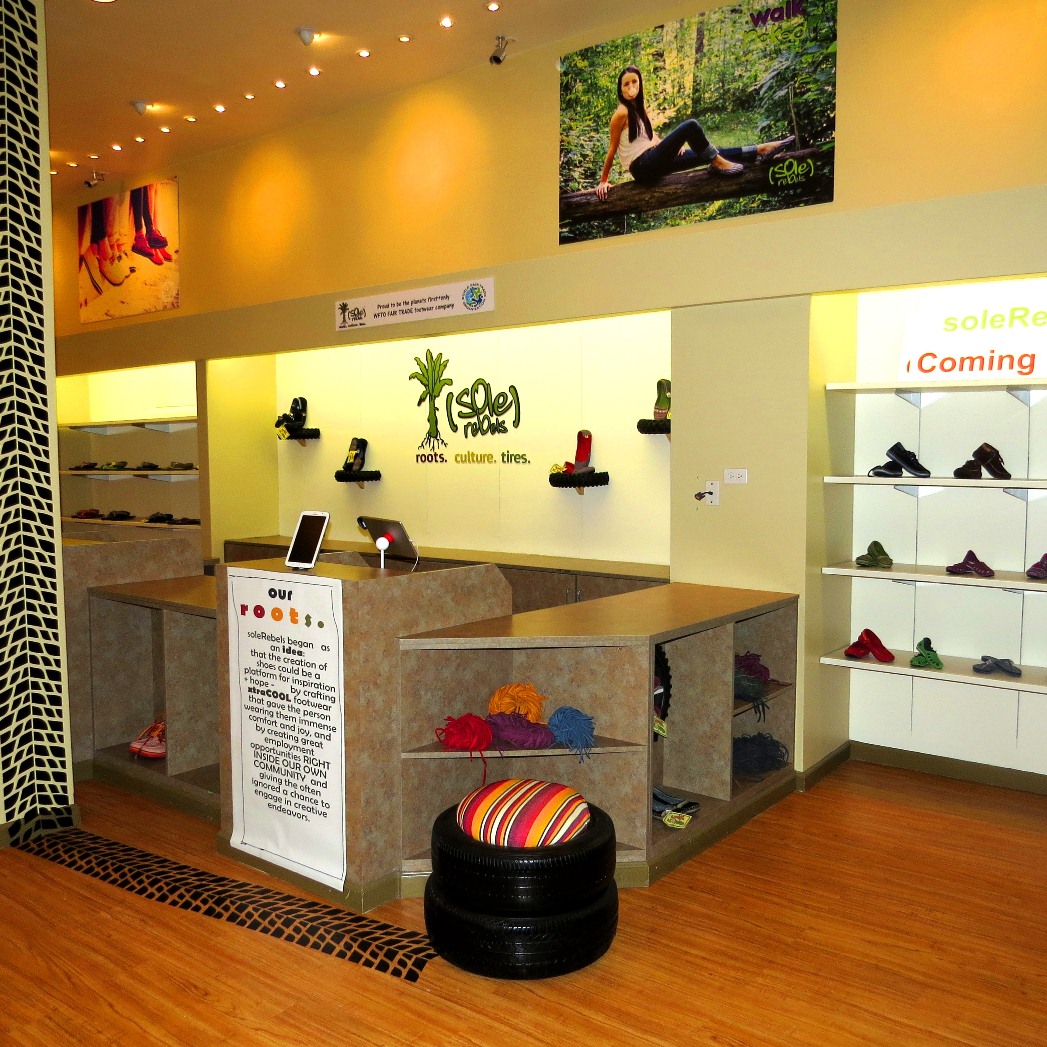
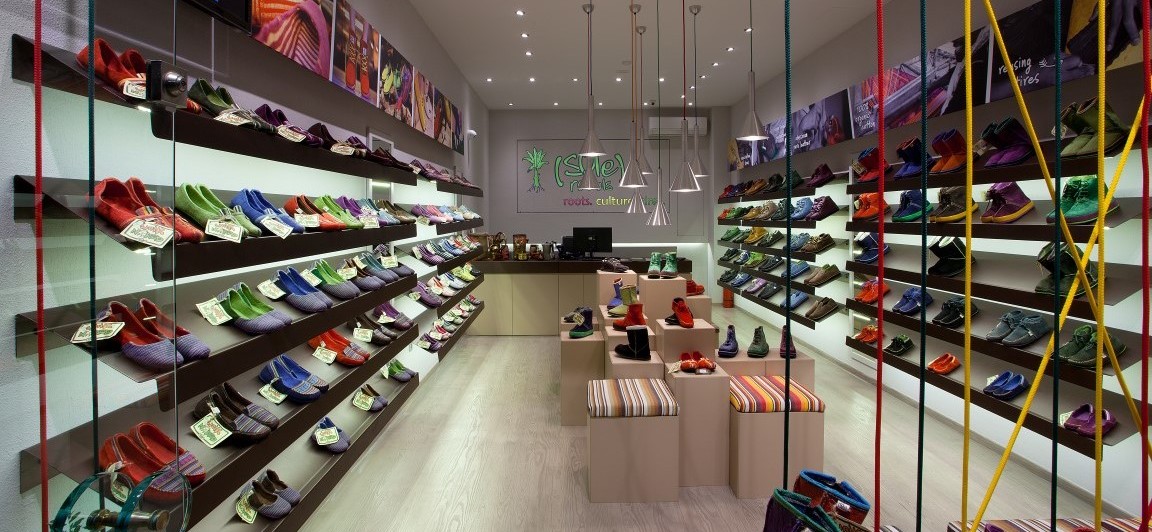
But soleRebels was not the endpoint. It was the proof of principle. If Ethiopian artisans could produce world-class footwear from heritage materials and sell it globally, the same logic could be applied to any sector where Ethiopia had deep knowledge, superior raw materials, and centuries of craft. The most obvious candidate was staring at Bethlehem from her mother’s ceramic roaster.
Prosperity, Not Alleviation
Before the coffee, the philosophy.
“Poverty alleviation is a myth. Prosperity creation is the sole route to the elimination of poverty. And to create sustained prosperity you have to create something truly world class.”
Her critique is precise: the conventional Fair Trade model presupposes that producers will remain in need of support. It never contemplates that the global South can become an equal or dominant partner. She compares her approach to the European luxury houses: invest in top artisans crafting top products, then invest in making people understand the value. The difference is that her artisans are Ethiopian, her factories are in Ethiopia, and the wealth stays there.
“People don’t want to be ‘not poor.’ They want some form of prosperity. The best way to create prosperity is the tried and true method: create amazing products with service to match, pay your workers very well, operate in a highly ethical and transparent manner.”
Her Mother’s Roaster
If soleRebels took the thread from Bethlehem’s mother’s spinning, Garden of Coffee took the fire from her mother’s ceramic roaster. It is the venture where her philosophy finds its most vivid expression.
Bethlehem frames the venture around two ideas she coined. The first is what she calls the Fourth Wave of coffee. Where the celebrated third wave taught Western consumers to care about single origins and terroir, the Fourth Wave asks a harder question: why are the nations that grow, harvest, and understand coffee better than anyone on earth still shipping their raw beans elsewhere to be roasted, branded, and sold at a premium by someone else? The Fourth Wave is about coffee-producing nations, starting with Ethiopia, taking control of the full value chain.
The second is what she has trademarked as Origin Trade: a model where sourcing, processing, roasting, and packaging all happen at source. The quality is preserved because the product is transformed where it was grown. The economic value stays with the people who grew and roasted the beans. And the environmental cost drops because nothing is being shipped raw across oceans before it becomes a finished product.
The thesis is elegant. Building it in practice is another matter. Value-added coffee export from Ethiopia faces structural headwinds that philosophy alone cannot resolve. The global supply chain is engineered to move raw beans out of origin countries, not finished products. International buyers are accustomed to controlling the roast. Many specialty roasters consider proximity to the consumer essential for freshness and quality control. Infrastructure for packaging, cold-chain logistics, and international certification at origin remains limited. And Ethiopia’s foreign exchange regulations add another layer of complexity for any company trying to build a global consumer brand from Addis Ababa. Bethlehem has had to build against all of it.
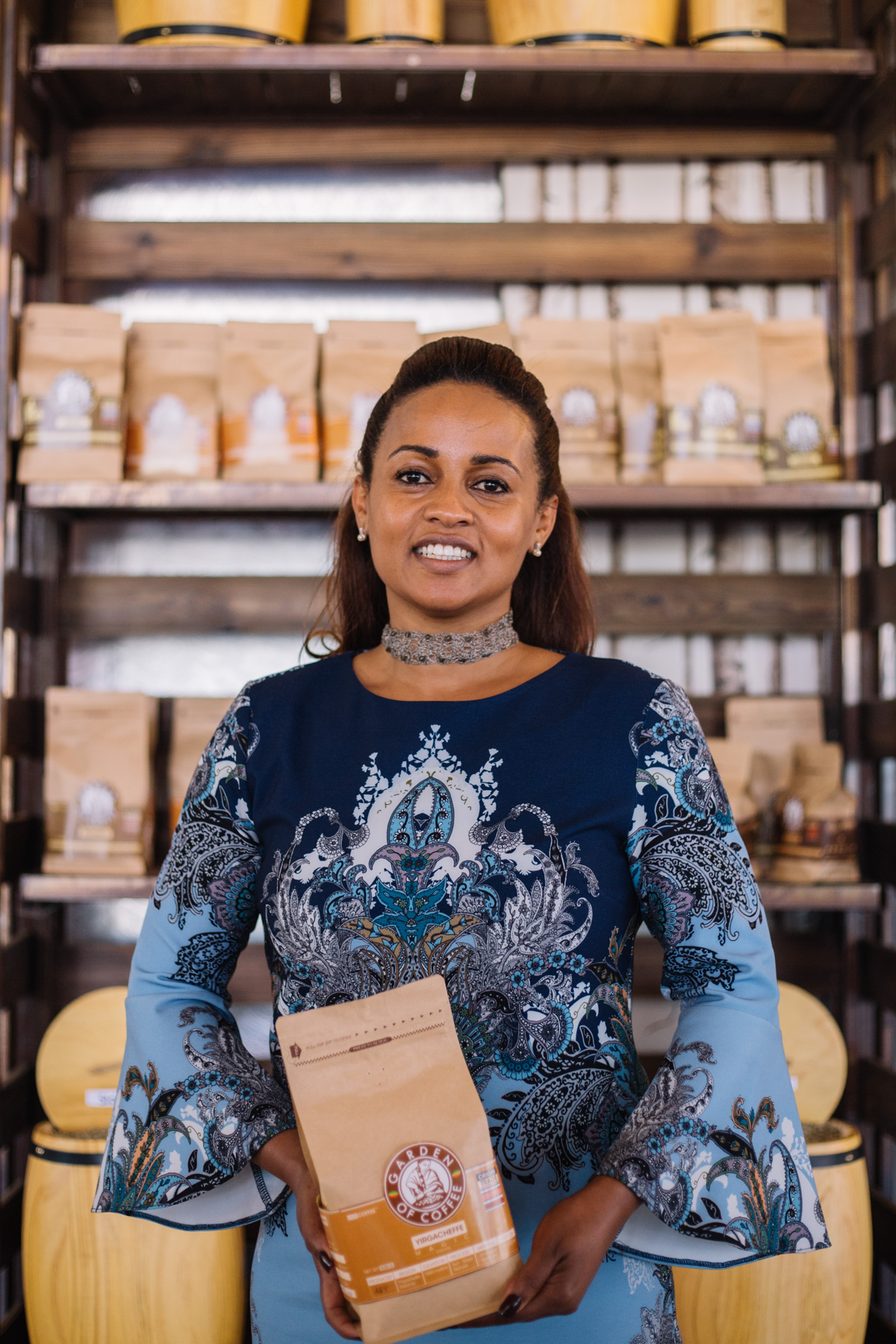
Garden of Coffee roasts exclusively on hand-crafted ceramic roasters. The design has been innovated and improved upon from the traditional Ethiopian cone, but it is still fundamentally the same instrument Bethlehem’s mother used at home. The roasters are made by hand by the company’s own team of ceramicists. Each roasting artisan works by hand, watching, smelling, and listening to every single bean. The company employs seventeen hand-roasting artisans, each earning the equivalent salary of a bank manager.
The model is highly personalised. Customers choose their own beans. They choose their roast level. And they choose who roasts those beans, selecting a specific artisan whose technique and sensibility they trust. Every order is roasted on demand and packed the same day.
The Ethiopian Coffee & Tea Authority named Garden of Coffee the country’s number-one value-added coffee exporter, a distinction that validates the model against every structural objection.
The Café-Roasteries
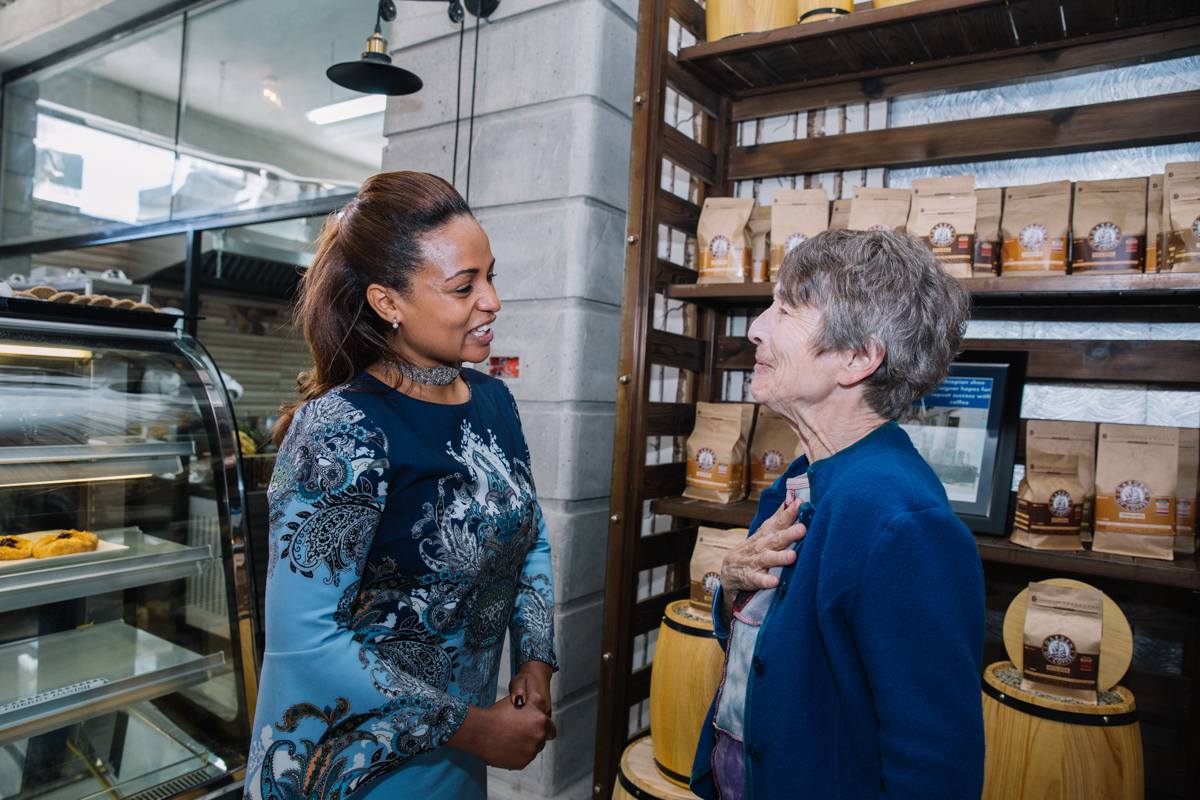
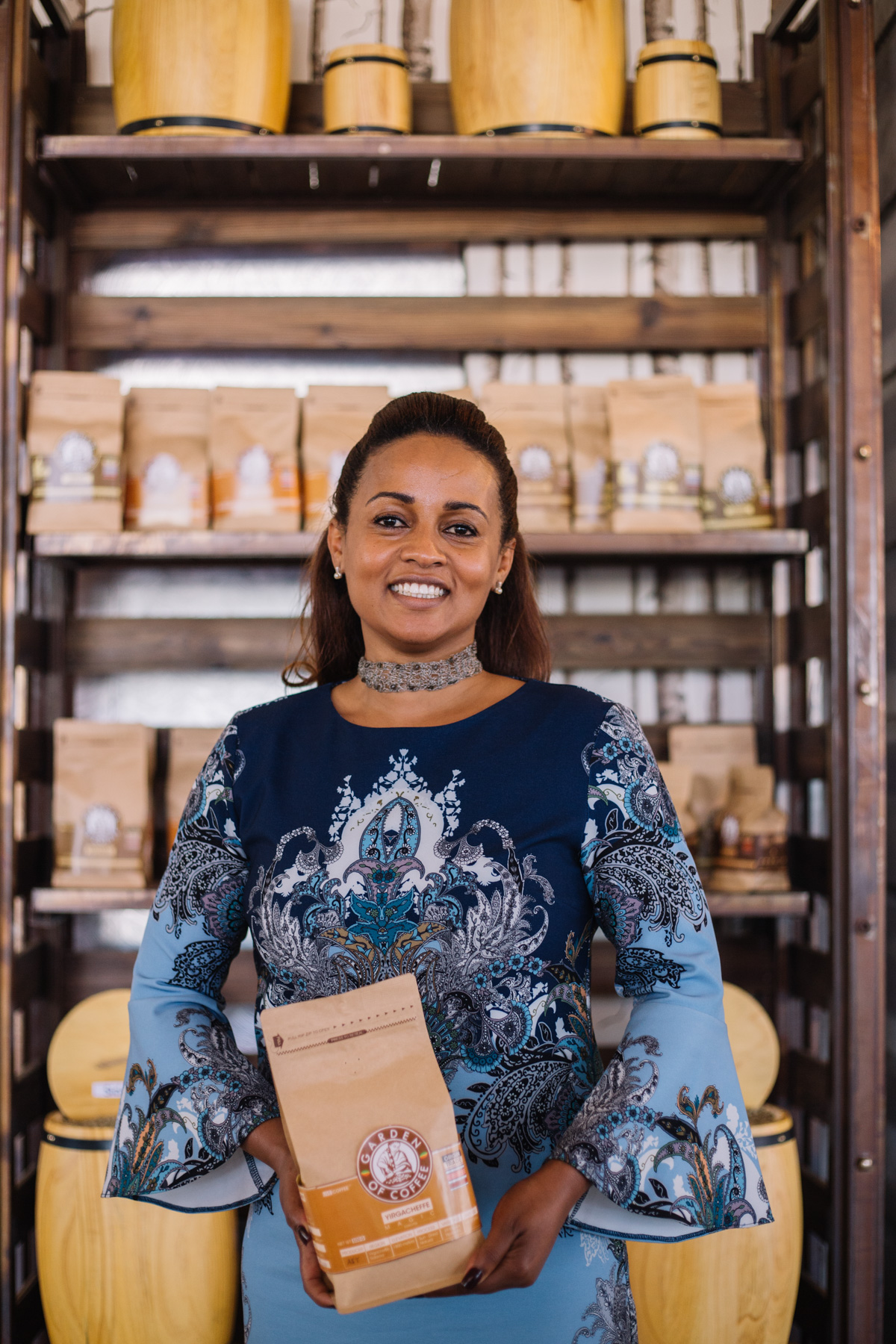
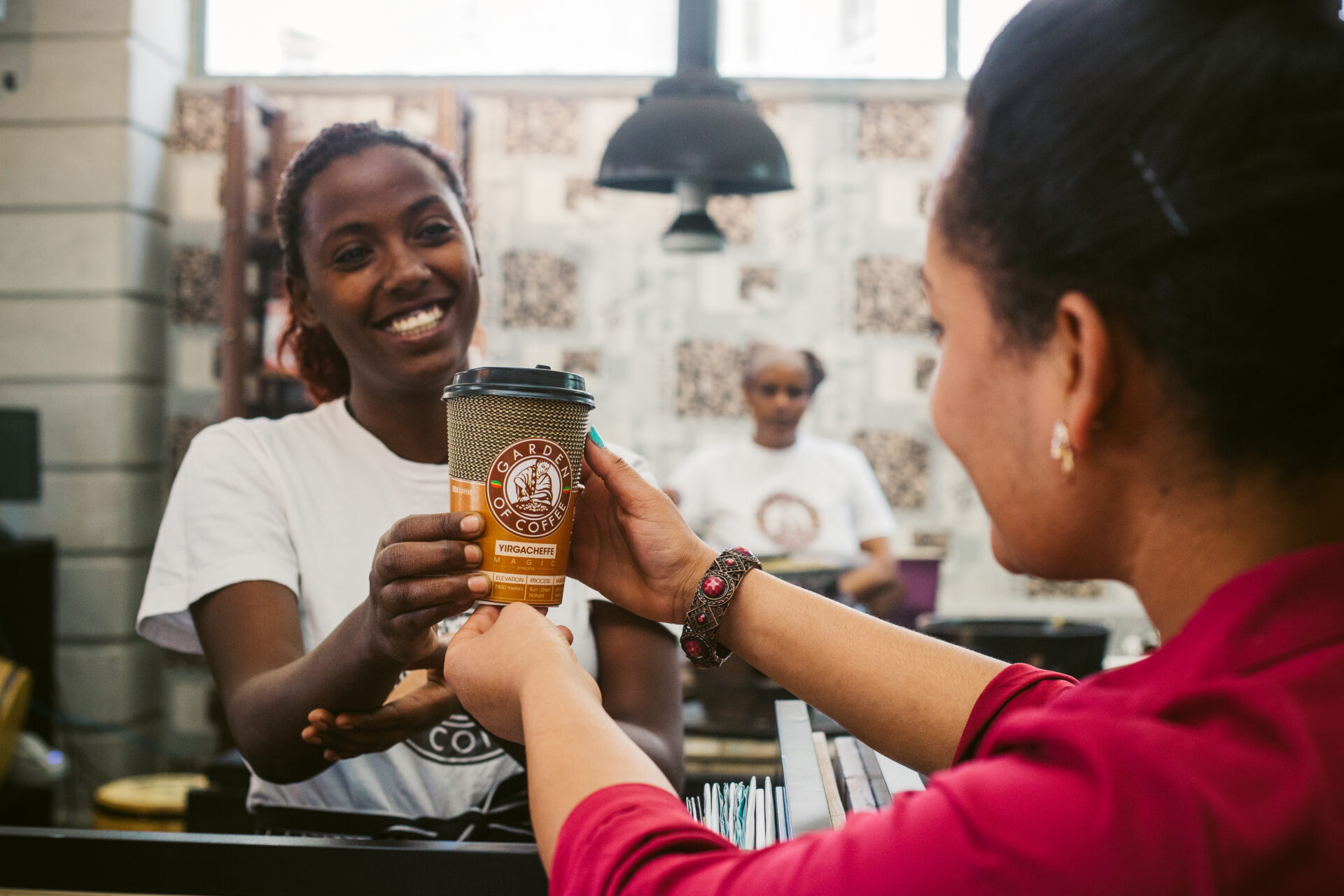
Today Garden of Coffee operates four café-roasteries across Addis Ababa. The original in Sar Bet at the JFK Building. A second in Tele Bole at Grace Plaza. A third in Kazanchis at Bloom Tower. And a fourth inside Entoto Park, the nature reserve that crowns the city from Mount Entoto.
Walk into any of them and the experience begins before you sit down. You hear the sharp crack of beans splitting under heat. You watch the colour shift from grassy green to deep caramel, the roaster’s hands turning the ceramic vessel in a rhythm that looks unhurried but is precise to the second. Customers watch their beans being roasted in front of them. The aroma is not piped in or manufactured. It is the actual process, unfolding at arm’s length.
The e-commerce platform ships hand-roasted single-origin beans to customers worldwide. Garden of Coffee was the first Ethiopian artisan roasting company to become a member of the Specialty Coffee Association. It is not, despite the comparisons, Ethiopia’s answer to Starbucks. Starbucks industrialised coffee. Garden of Coffee is moving in the opposite direction, returning it to the hands of the people who have been perfecting the art since coffee was born in the Ethiopian highlands.
The Landscape
Women contribute up to seventy percent of the labour in global coffee production yet typically have less access to land, credit, and market information, a gap that makes entrepreneurs like Kenya’s Margaret Nyamumbo (Kahawa 1893), Ghana’s Emi-Beth Quantson (Kawa Moka), and Ethiopia’s Hirut Berhanu and Mahder Ferede (Dumerso Coffee) all the more significant. What distinguishes Bethlehem’s operation is the degree of integration: the full chain from bean to global consumer, all at origin, all under one company.
The Portfolio in 2026
Garden of Coffee and soleRebels are the most visible ventures, but the portfolio extends further. Republic of Leather applies the artisan model to handbags and accessories crafted from Ethiopian hides. TeffTastic takes Ethiopia’s ancient grain to the snack market. Through Made by Ethiopia, Bethlehem has brokered contracts between global footwear brands and Ethiopian factories, generating over 100,000 job opportunities and more than $1 billion in export revenue.
Then there is Selam Bank, a mortgage bank she co-founded in 2021, capitalised at $116 million, with a particular focus on making homeownership accessible to female-headed households. If the coffee and footwear ventures put prosperity in the hands of artisans, the bank puts it under the roofs of families.
By the Numbers
Forbes named her one of the World’s 100 Most Powerful Women. Business of Fashion placed her on the BoF 500. In 2023, she was appointed Co-Chair of the G20 Action Council on African Economic Integration. She still answers every customer email herself.
Her Mother’s Daughter
For women building businesses across the continent, women navigating the tension between local roots and global ambition, Bethlehem’s career is not an abstraction. It is proof that you can stay, that you do not need outside saviours, that artisans, heritage, and clear thinking about value chains can get you further than anyone else’s low expectations.
And you may need your mother.
The thread Bethlehem’s mother spun on a wooden inzert became the fabric inside a soleRebel. The beans she selected at market, the ceramic roaster she turned by hand. Those became four café-roasteries and a Fourth Wave movement. The artisan knowledge she carried, passed to her from her own mother, now employs hundreds of women and men in Addis Ababa.
Whether the model can reshape a global commodity chain built over centuries, whether Origin Trade becomes a template or remains an exception, those questions are still open. What is no longer in question is that the model works. Ethiopian coffee, roasted by Ethiopian hands, branded by an Ethiopian company, sold to the world. The value chain, for once, kept whole.
— • —
Reader’s Guide
Who is Bethlehem Tilahun Alemu?
An Ethiopian serial entrepreneur born in 1980 in Addis Ababa. She founded soleRebels, Garden of Coffee, and Republic of Leather, and co-founded Selam Bank. Her initiative Made by Ethiopia has generated over 100,000 jobs and $1 billion in export revenue. Forbes named her one of the World’s 100 Most Powerful Women.
What is Garden of Coffee?
An artisan coffee company with four café-roasteries in Addis Ababa where customers choose their beans, roast level, and which artisan hand-roasts their order on traditional ceramic roasters. Named Ethiopia’s number-one value-added coffee exporter by the Ethiopian Coffee & Tea Authority.
What is the Fourth Wave of coffee?
A concept coined by Bethlehem advocating for coffee-producing nations to control the full value chain (growing, roasting, branding, and selling) rather than exporting raw green beans for others to profit from.